
When Love Isn't the Hard Part: Why LGBTQIA+ Couples Sometimes Need More Time for the Conversations That Matter Most
Some relationship conversations simply deserve more than fifty minutes every week or two. LGBTQIA+ couples often navigate complex discussions shaped by identity, family, trauma, values, and personal history. An affirming couples intensive creates the time and emotional space to explore those conversations with greater depth, empathy, and understanding.

Repair Matters More Than Perfection in LGBTQIA+ Affirming Care
LGBTQIA+ affirming care is not about perfect language or never getting things wrong. This post explores why relational repair and responsiveness matter more than perfection in therapy.

Affirming Isn’t the Same as Safe: What LGBTQIA+ Clients Actually Notice in Therapy
LGBTQIA+ affirming care involves more than inclusive language alone. This post explores the subtle relational experiences queer clients often notice immediately in therapy and why emotional safety matters more than performative affirmation.

How to Know If Therapy Is Working (or If Something Needs to Change)
Therapy progress isn’t always obvious—but there are ways to tell whether the process is helping. This post explores what to look for and when it may be time to reassess fit or direction.

What “Progress” Actually Looks Like in Therapy
Therapy progress doesn’t always look the way people expect. This post breaks down what real change looks like—and why it can be easy to miss.

Why Therapy Can Feel Hard Before It Feels Helpful
Therapy doesn’t always feel better right away. This post explains why therapy can feel difficult at first—and why that experience is often part of the process.
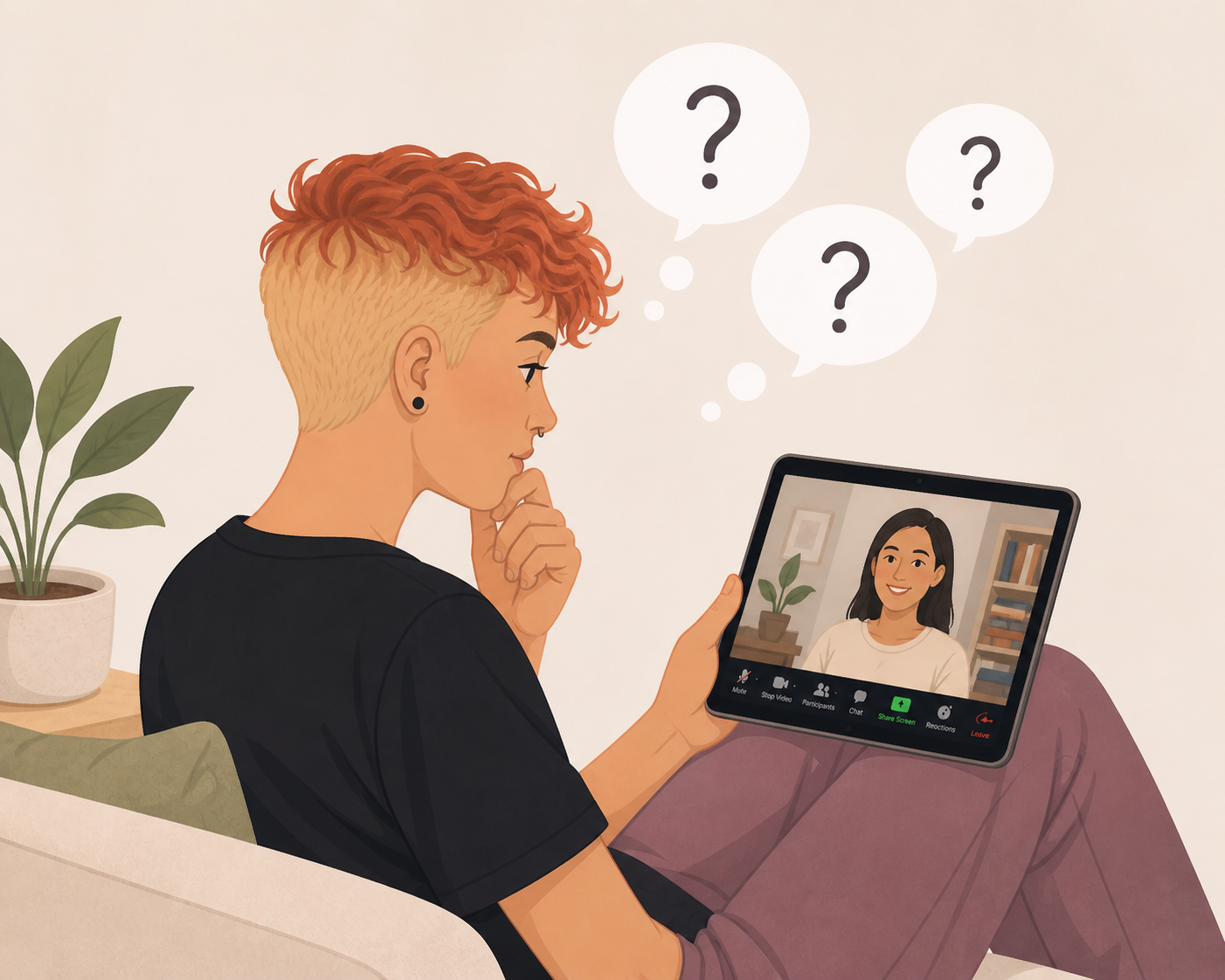
What the First Therapy Session Is Actually Like (and What It Isn’t)
Wondering what your first therapy session will actually be like? This post breaks down what to expect—and what might surprise you when starting therapy.

Is Virtual Therapy Right for You? How to Know If This Format Fits
Virtual therapy works well for many people—but not everyone. This post helps you determine whether telehealth is the right fit for your needs, preferences, and goals.

Why Some Clients Do Better in Weekly Virtual Therapy Than In Person
Virtual therapy isn’t always a compromise. For some clients, it creates conditions that make deeper, more consistent work possible than in-person therapy.

What People Worry They’ll Lose in Virtual Therapy (and What Actually Happens Instead)
Concerned virtual therapy won’t feel the same? This post explores common fears—and what many clients actually experience once weekly telehealth sessions begin.

Does Weekly Therapy Work Virtually? What Actually Matters in Ongoing Care
Does virtual therapy really work? This post explores what makes weekly therapy effective—and how telehealth services in Nevada and Florida can support meaningful, consistent care.

How to Talk to Couples About Intensives Without Overwhelming Them
The way couples intensives are introduced often determines how they’re received. This post offers language and framing that reduce fear and increase clarity—without urgency or pressure.

How Couples Intensives Complement Ongoing Therapy (Not Replace It)
Couples intensives don’t replace weekly therapy—they often enhance it. This post explains how intensives function as accelerators within a broader therapeutic process and support continued growth afterward.

What Makes a Couple a Good (or Poor) Fit for a Couples Intensive
Couples intensives are not a one-size-fits-all solution. This post outlines what makes a relationship a strong fit, when an intensive may not be appropriate, and why careful assessment protects couples—not excludes them.

How to Know When a Couple Needs More Than Weekly Therapy
Many couples gain insight in weekly therapy but struggle to create lasting change. This post explores how to recognize when format—not effort—is the limiting factor in relationship growth.

Common Signs a Relationship Is Stuck — and Why Waiting Often Makes It Harder
Many couples wait longer than they want to before seeking support—not because they don’t care, but because the signs of being stuck are often subtle. This post explores common indicators of relational stuckness and why waiting can make repair more difficult over time.

What Actually Happens in a Couples Intensive (And What Doesn’t)
Couples intensives are often misunderstood as overwhelming or emotionally chaotic. This post explains what actually happens in a couples intensive, what doesn’t, and how structure and safety guide the process.

Why Weekly Couples Therapy Isn’t Always Enough
Emotionally Focused Therapy (EFT) intensives can be life-changing. Instead of spending months in weekly therapy sessions trying to make slow progress, an intensive allows you to dive deep into your relationship dynamics and create real change in just a few days.

Is a Couples Intensive Right for You? How to Know If This Format Fits
Couples intensives aren’t the right fit for every relationship — but for the right couples, at the right moment, they can create meaningful movement. This post explores what a couples intensive actually is, who tends to benefit most, and how to know whether this format fits your relationship right now.

Unlocking Your Path to Relationship Transformation: The Power of a 90-Minute Extended Consultation
If you're here, you're probably exhausted by the same recurring conflicts, disconnection, or sense of loneliness creeping into your relationship. You've tried everything—talking, reading books, watching videos—but nothing seems to shift the dynamic. You're at a crossroads, feeling hopeful yet uncertain about the next step.
Enter the 90-Minute Extended Consultation—your vital first step toward lasting relationship change through Emotionally Focused Therapy (EFT).